

Exponentials were on my mind this month (this is nothing new, of course). Back in Un-unpluggability I wrote
exponential expansion (until constraints are reached) ... in practice often manifests as first imperceptible and then rapid escalation.
Connor Leahy, CEO of Conjecture AI, echoes me more pithily
As we learned with COVID, there are only two times to react to an exponential - too early or too late.
Of course, everything has been said before, and we are both in dialogue with the famous quote from Professor Bartlett
The greatest shortcoming of the human race is our inability to understand the exponential function.
I brought a more specific and lighthearted1 take in Invading Australia, where I looked more closely at some case studies of expansionist/replicating (exponential) systems in the field of human biosphere interventions. In summary,
The experiment, this introduction of foreign species was... successful, if by 'successful' you mean 'devastating and difficult or impossible to roll back'.
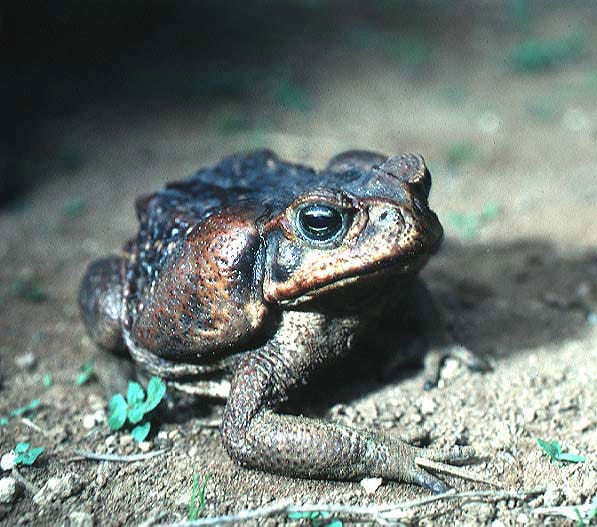
We learned about some pesky amphibians:
It turns out that cane toads don't jump or climb well, so outside of the lab, where beetles live at the top of sugar cane, the toads were all but useless at their intended purpose. (Out of context failure!)
But the toads were a success, in their own terms: unexpectedly unfussy eaters, prolific reproducers, and poisonous to most wildlife, they have rapidly colonised Queensland state, lately expanding into New South Wales and the Northern Territories, while being resilient to every attempt at pushing them back. We fought fire (cane beetles) with fire (toads), and ended up with two fires!
and we looked at the rather amusing case of humans deploying yet more replicators to bring the toads under control, namely toad viruses and/or genomic interventions like driving fertility-reductions. I'm reminded of the Old Lady Who Swallowed A Fly.
There's good (?) news, of course:
the prickly-pear or paw-paw is another species inadvertently unleashed on the Australian ecosystem, which has caused some displacement of native wildlife. A moth (believe it or not, Cactoblastis!) was found which actually does seem to work as a self-regulating suppressant of the cacti.
When it comes to AI, we'd have to be very very prepared in order to expect shenanigans like this with replicating or propagating systems to end well.
Also, no-one picked up on my Charles Darwin/extinction pun: 'endless formerlies most beautiful'??
Upcoming, alignment and cooperation
I'm working on a paper2 with some collaborators in Oxford, analysing cooperation and alignment concepts for AI. What does this mean? When there are lots of AI systems, we want them to generate value by interacting positively rather than destroying value through conflict or anarchy. That's cooperation. And we want the values they are oriented at to be valuable to us, rather than arbitrary (or worse, harmful) things. That's alignment. Expect a takeaway or two to appear in the near future elucidating and elaborating on that.
Extinction of hundreds of species, lighthearted?? I confess this is questionable. Please don't send me angry messages about how much you miss the giant wombats.
Actually we're done really, it's just going through review which, in contemporary academia, is an often arcane, perfunctory, and glacial process, rather far removed from the very healthy review culture I've been lucky enough to experience and contribute to in (some) industry and independent research settings. Not coincidentally, some different collaborators and I are trying various things in Oxford to incubate healthy opt-in review for researchers in AI safety. If you have thoughts on this topic, I'd love to hear them!